
Home » Agentic Era » Static Wikis are Dead: Why Knowledge Bases are Obsolete in the Agentic Era
Static Wikis are Dead: Why Knowledge Bases are Obsolete in the Agentic Era
Let’s be honest: When was the last time your company’s onboarding page on Confluence was actually updated? We build knowledge bases with the ambition of creating a “Single Source of Truth,” but the reality is different: we’re trapped in a cycle of manual updates because information stagnates the moment it’s published. The time wasted navigating these static pages during a fast-paced workday is a massive hidden cost. Indeed, when employees stop visiting the knowledge base you’ve so carefully curated, the ‘Wiki Paradox’ becomes a painful reality.
Industry data estimates that over 55% of corporate data is “Dark Data”—collected but never utilized. Consequently, wrestling with this surplus is like trying to drink from a firehose; it’s overwhelming, inefficient, and ultimately unsustainable. Simply stockpiling data is no longer a viable strategy for driving productivity.
Why Knowledge Centralization Fails in Agentic Knowledge Management
The Paradox of Tools
We constantly adopt new tools to solve problems, but ironically, these very tools often fragment our collective intelligence even further. According to eGain, 36% of employees juggle three or more knowledge management tools, while 31% don’t even know exactly how many tools they are using.
The erosion of information discoverability is even more alarming. For instance, Gartner reports that 47% of digital workers struggle to find the specific intel they need to perform their jobs. Ultimately, we are drifting in a data swamp, unable to pinpoint the exact answer required for the task at hand.
Despite this, many teams feel a false sense of security simply because they’ve documented their processes in Document360 or Notion. This stems from the misconception that “Storage equals Knowledge.” In reality, the insights that drive a business live and breathe within heated Slack discussions, the intricate histories of Jira tickets, and the active threads in our inboxes.
For startups where speed is everything, information evolves faster than it can be recorded. Therefore, attempts to centralize fail because we only build the “Pipes” (Integrations) without implementing a “Brain” (Agentic Layer) to interpret the context flowing through them.
You Don’t Need a Library
Integrating dozens of SaaS tools doesn’t guarantee a connected team. Integrations alone are blind to context. Furthermore, true intelligence must go beyond mere connectivity to interpret data and drive action.
If a traditional Knowledge Base (KB) is a massive library for storing books, then an Agentic Layer is the librarian who has read every single page in real-time and can deliver the exact answer you need in seconds.
|
Feature
|
Traditional KB (e.g., Document360, Notion, Zendesk...)
|
Agentic Layer (e.g., Refinder)
|
|---|---|---|
|
Core Nature
|
Destination for Information
|
Infrastructure for Intelligence
|
|
Management
|
Manual input and curation
|
Automated extraction and inference
|
|
State & Scope
|
Static: Limited to platform-specific docs
|
Live: Real-time context across 20+ SaaS tools
|
|
Target Audience
|
External manuals, static guides
|
Internal teams navigating rapid change
|
|
Value
|
"It's all gathered here."
|
"Instant, actionable intelligence."
|
From the Era of Search to the Era of Answers
Adding more Notion pages won’t raise your team’s IQ. True knowledge management isn’t about the hours spent writing wikis; it’s about the velocity at which you can extract and apply insights.
To achieve this, AI Agents like Refinder redefine your workflow:
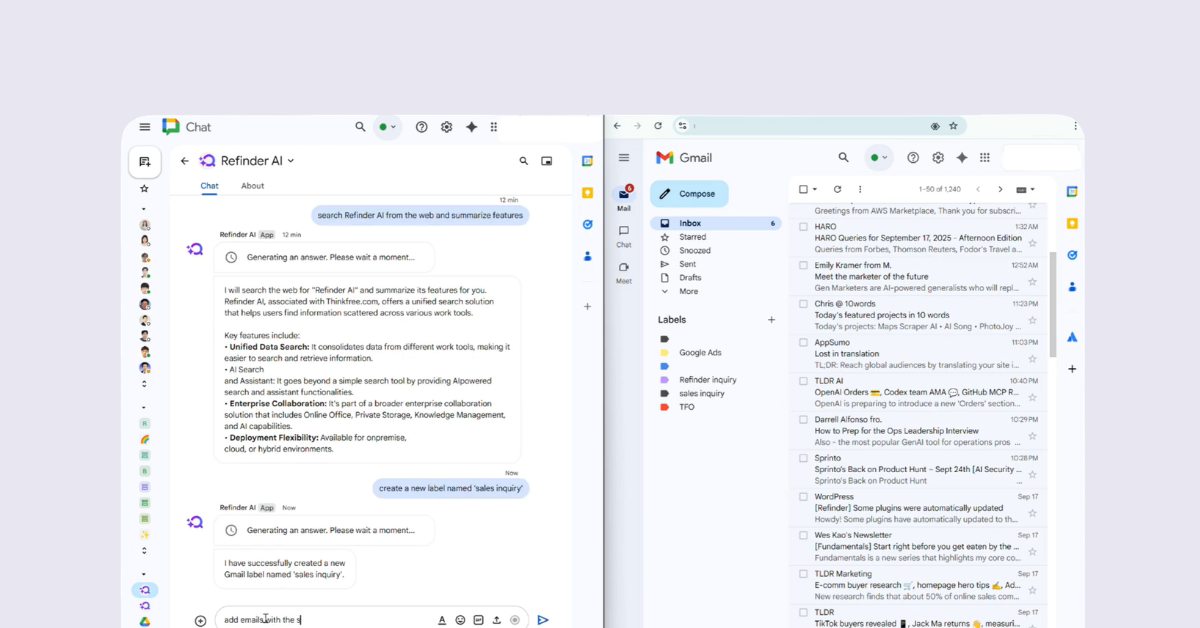
- Zero UI: Eliminate the need to toggle between apps or dig through tabs. Access your entire company’s brain directly through Slack or Google Chat.
- Contextual Briefing: Ask, “Summarize this project’s history, cross-referencing yesterday’s meeting decisions.” Refinder delivers a synthesis of information scattered across your entire stack.
- Proactive Execution: Move beyond passive retrieval. Refinder performs practical actions—like scheduling follow-up meetings on Google Calendar or drafting emails based on recent discussions.
Build a Living Nervous System for Your Team
We often mistake well-stored data for a business asset. However, an archived wiki is a fossil, not a resource. You can study a fossil, but it won’t help you solve tomorrow’s problems. The real breakthrough is making information agentic—enabling it to find its own way to where it’s needed most.
Stop wasting cycles searching for wiki pages that are likely already obsolete. That time is better spent building a superior product. Let Refinder handle the flow of knowledge. Experience the transformation of a team that doesn’t just store data, but acts on intelligence.
Like this post? Share with others!